Movie


Margaret Qualley had the ingredients of a conventional movie star early on, but the most interesting part of her career has been her willingness to move away from them. Her dance training left her with an unusually precise command of posture, distance and rhythm, while her choices have grown steadily less safe and more demanding. Maid proved that she could sustain the emotional weight of a long-form lead, Sanctuary sharpened her control of performance and power, and The Substance brought years of accumulated skill into much wider public view. Her rise has not been a sudden breakthrough so much as a gradual expansion of range, risk and creative freedom.





Across long-form television and independent film, she gradually found a screen presence of her own. · CHAPTER 01 (7 Movies)
One of Qualley’s earliest screen appearances, marking the beginning of her transition from dance and modeling into acting and placing her within the independent-film world she would continue to revisit.
A lack of parental guidance encourages teens in an affluent California town to rebel with substance abuse and casual sex.
Her first major long-form role. Across three seasons, Jill Garvey gave Qualley the space to develop a character over time and established her as far more than a visually striking young performer.
An early step into a large-scale Hollywood genre production. As Amelia, Qualley became central to the mystery and began holding her own within an established ensemble and a more commercial filmmaking environment.
An important early dramatic role that allowed Qualley to explore repression, faith and personal conflict with greater depth, confirming her ability to carry emotionally demanding material.
Part of the independent-film period that shaped her early career. Though not one of her defining performances, it reflects the years in which she was steadily building experience before wider recognition arrived.
Despite the film’s divisive reception, it remains a notable point in Qualley’s early trajectory. Mia Sutton brought her into a globally distributed streaming production and showed an early willingness to move beyond intimate drama.
A harsh, physically charged independent drama that placed Qualley in a world of violence and instability. The role anticipates her later attraction to characters far removed from conventional young-star imagery.
An ex-marine who struggles to provide for his family and a violent drug dealer with an undefeated fighting record are determined to compete in the Donnybrook, a legendary, bare-knuckle brawl with a cash prize of $100,000.
Greater visibility and sustained leading roles proved that she could carry the emotional weight of a work. · CHAPTER 02 (8 Movies)
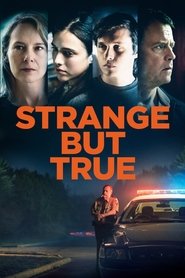
One of Qualley’s first films to place her near the center of the narrative. Its modest scale makes it less important as a title than as evidence of her gradual move from supporting parts toward sustained leading work.
As a young scientist searches for a way to save a dying Earth, she finds a connection with a man who's racing to catch the last shuttle off the planet.
A significant step into literary adaptation and socially engaged American drama. Though not the film’s central figure, Qualley became part of a more serious dramatic environment shaped by race, class and social pressure.
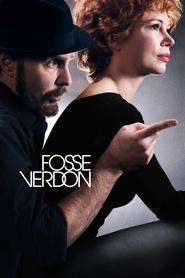
A crucial early showcase for the connection between Qualley’s dance background and her acting. Playing Ann Reinking allowed her to turn physical training into character work and brought her major industry recognition.
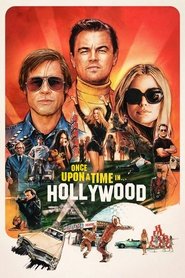
The film that introduced Qualley to a much larger international audience. Pussycat is not a large role, but her mix of ease, seduction and unease gives the character an unusually strong presence and made Qualley instantly recognizable.
A more central dramatic role that asked Qualley to sustain uncertainty, vulnerability and obsession across a mystery-driven story, continuing her transition from distinctive supporting player to fuller leading performer.
Part of Qualley’s growing presence within prestige ensemble filmmaking. The project placed her inside a historical drama concerned with celebrity, surveillance and political pressure, broadening the kinds of productions around her.
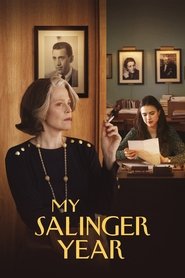
One of Qualley’s earliest fully developed film leads. Rather than relying on an eccentric or heightened character, she carries the film through restraint and observation, giving shape to a young woman trying to locate herself within work and adulthood.
A college grad takes a clerical job working for the literary agent of the renowned, reclusive writer J.D. Salinger.
The decisive leading-role breakthrough of Qualley’s early career. As Alex, she sustains the emotional weight of an entire limited series through exhaustion, persistence and restraint, establishing that she could carry demanding material over many hours ra
After fleeing an abusive relationship, a young mother finds a job cleaning houses as she fights to provide for her child and build them a better future.
Auteur-driven projects pushed her toward characters that were stranger, riskier and harder to contain. · CHAPTER 03 (5 Movies)
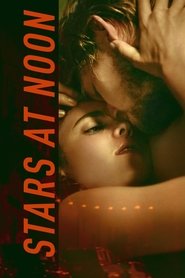
A major step into the center of auteur-driven cinema. Working with Claire Denis, Qualley takes on a lead role shaped by uncertainty, desire and political unease, pushing further away from conventional star vehicles.
In present-day Nicaragua, a headstrong American journalist and a mysterious English businessman strike up a romance as they become embroiled in a dangerous labyrinth of lies and conspiracies and are forced to try and escape the country.
One of the clearest demonstrations of Qualley’s control as a performer. In an almost entirely contained two-hander, shifts in voice, movement and physical distance become part of an ongoing struggle for power.
Qualley’s first collaboration with Yorgos Lanthimos. Her role is relatively small, but the film placed her inside a deliberately stylized and unstable performance world that would become more important in their later work together.
A looser and more overtly comic leading role that broadened Qualley’s range within genre filmmaking. Ethan Coen’s crime-comedy framework allowed her to work with sharper timing, physical humor and a more openly playful screen presence.
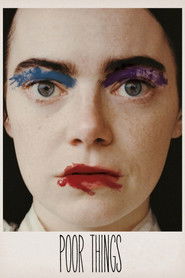
Qualley’s second collaboration with Lanthimos gave her far more room to inhabit characters defined by discomfort, dislocation and shifting identities. The film strengthened her association with roles that resist easy psychological explanation and conventi
A major breakthrough brought years of accumulated work into focus and opened a wider range of leading opportunities. · CHAPTER 04 (5 Movies)
A major turning point in Qualley’s career. Sue brings together the physical precision, comic edge and underlying danger that had been developing across her earlier work, while exposing those qualities to a much broader international audience.
A fading celebrity decides to use a black market drug, a cell-replicating substance that temporarily creates a younger, better version of herself.
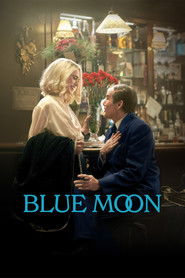
Her collaboration with Richard Linklater shows that greater visibility did not push her toward a single commercial path. She continues to choose performance-driven work built around character, dialogue and close observation.
As private investigator Honey O’Donahue, Qualley takes the center of Ethan Coen’s crime comedy with a role that combines deadpan humor, sexuality and genre confidence. It confirms her growing ability to carry stylized material on her own terms.
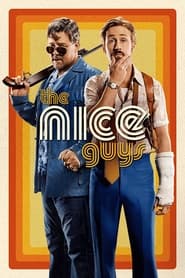
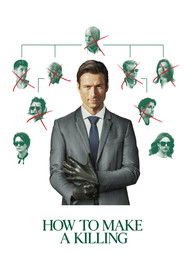
Part of Qualley’s expansion into larger and more overtly commercial crime filmmaking. The project places her within a broader star-driven ensemble while preserving the dark comic edge that has become increasingly compatible with her screen presence.
Working with Ridley Scott brings Qualley into a larger-scale survival drama and marks another step beyond the independent and auteur-driven work that shaped much of her rise. The film reflects the widening range of productions now available to her.