Movie


The Bible moves across an immense span of time: flood and migration, slavery and Exodus, kings and prophets, followed by the birth, ministry, death, and resurrection of Jesus and the earliest years of the Christian movement. Its settings and central figures keep changing, but questions of family, power, faith, betrayal, forgiveness, and mortality persist throughout. Cinema has returned to these stories for more than a century. Animation, historical spectacle, intimate character drama, and religious epic have all found different ways into Noah, Joseph, Moses, David, Mary, Jesus, and Paul, allowing familiar passages to take on markedly different lives on screen.





Flood, covenant, and migration shape the earliest stories and set everything that follows in motion. · CHAPTER 01 (4 Movies)
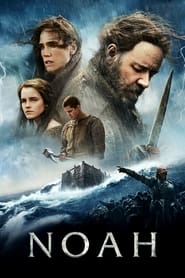
The flood remains the film's great spectacle, but its more interesting choice is to make Noah's judgment increasingly difficult to live with. By expanding well beyond the brief account in Genesis, the film turns a familiar story of destruction into a much darker argument about whether humanity deserves another beginning.
A man who suffers visions of an apocalyptic deluge takes measures to protect his family from the coming flood.
Rather than attempting the whole life of Abraham, the film concentrates on the journey toward the sacrifice of Isaac. That narrow focus brings the story close to the father and son themselves, allowing one of Genesis's shortest and most unsettling episodes to unfold as an intimate test of faith, love, and obedience.
Joseph's betrayal by his brothers, slavery in Egypt, imprisonment, interpretation of Pharaoh's dreams, and eventual rise to power receive unusually generous space here. Its importance to the collection is also structural: Joseph's story carries the patriarchal family into Egypt, preparing the ground for the Exodus that follows generations later.
Its age would normally count against it, but no later film has convincingly replaced it as a substantial screen version of Sodom, Lot, and the destruction of the cities. Large-scale sets and classical spectacle give this difficult section of Genesis a cinematic presence that modern biblical film has rarely attempted again.
After slavery, plagues, and flight, a people begin the long search for a land of their own. · CHAPTER 02 (2 Movies)
The film begins by making Moses and Rameses brothers before history forces them onto opposing sides. That relationship gives the plagues, the confrontation with Pharaoh, and the crossing of the Red Sea an emotional cost beyond spectacle, while animation and music give the Exodus one of its most enduring modern screen forms.
The strong bond between two Royal Egyptian brothers is challenged when their chosen responsibilities set them at odds, with extraordinary consequences.
Its value lies partly in scale. Ridley Scott approaches the Exodus as a modern historical epic, filling Egypt with armies, royal power, catastrophe, and physical danger. The story overlaps with The Prince of Egypt, but the experience is entirely different: this is the Exodus imagined through live-action spectacle.
Heroes, rulers, and prophets rise in turn as faith is tested by desire, power, and ambition. · CHAPTER 03 (7 Movies)
Ruth's story contains no armies, collapsing kingdoms, or spectacular miracles. It begins with bereavement, migration, and the difficult work of building a life again. That modest scale preserves an important side of the Bible in which loyalty and faith are expressed through ordinary choices rather than public acts of power.
The Book of Ruth, is a triumphant love story in the face of adversity. This selfless journey of love and devotion is seen through the eyes of a young widow. Choosing to leave her homeland of Moab, she follows her mother-in-law Naomi to Israel after the death of her husband. Upon reaching Bethlehem, she meets and marries a man named Boaz, who is of ...
Samson possesses extraordinary strength without ever mastering his pride, desire, or vulnerability. The film understands that contradiction, turning romance, betrayal, and the loss of his power into the heart of the tragedy. Later versions have not been strong enough to displace this older adaptation.
The familiar victory over Goliath is only the beginning. By following David from shepherd boy toward his increasingly difficult relationship with Saul and the prospect of kingship, the film restores the larger arc behind one of the Bible's most frequently isolated heroic episodes.
Solomon has received far fewer major film adaptations than Moses or David, which gives this older epic a place that later cinema has never fully replaced. The Queen of Sheba, royal politics, desire, and responsibility complicate the familiar image of Solomon as simply the Bible's wisest king.
Esther has no army and initially little political power. What she gains is access, and the film is strongest when it recognizes that the fate of an entire people depends on when she chooses to reveal who she is and how much risk she is willing to accept.
Jonah's attempt to flee his calling, the storm, and the great fish already give the biblical story the shape of a fable. Animation and comedy suit that structure surprisingly well, while keeping its more difficult question intact: whether someone who has received mercy is willing to extend it to people he would rather condemn.
Daniel lives under Babylonian power without allowing exile to erase his religious identity. Dreams, court politics, and the lions' den all return to the same tension: how far someone can participate in a powerful empire without surrendering what he considers non-negotiable.
Taken into slavery after the fall of Jerusalem in 605 B.C., Daniel is forced to serve the most powerful king in the world, King Nebuchadnezzar. Faced with imminent death, Daniel proves himself a trusted Advisor and is placed among the king's wise men. Threatened by death at every turn Daniel never ceases to serve the king until he is forced to choo...
From the Nativity and ministry to the Crucifixion and Resurrection, the central Gospel story takes shape. · CHAPTER 04 (6 Movies)
The story begins with Mary rather than with the public life of Jesus. The Annunciation, pregnancy, Joseph, Herod, and the danger surrounding the birth are therefore experienced first as disruptions to a young woman's life, giving the familiar figure of the Virgin Mary a more immediate human presence.
A miraculous conception. A merciless king. A murderous pursuit. Mary's journey to give birth to Jesus unfolds in this biblical coming-of-age epic.
This film occupies the collection's broadest account of the life of Jesus, moving from his early years through ministry and miracles toward Jerusalem and the Passion. Animation and a family-oriented frame distinguish it from the old tradition of monumental biblical epics and provide a contemporary entry into a story filmed countless times before.
Rather than treating Jesus as the only possible center of the Gospel narrative, the film follows Mary Magdalene into the community around him. Her reasons for leaving home, her response to his teaching, and her uneasy place among the disciples create a perspective that conventional Jesus films have often left at the margins.
Martin Scorsese's most daring and profound biblical interpretation. Rather than presenting an untroubled icon, the film confronts Jesus with the full weight of human doubt, fear, desire, and the longing for ordinary life. The final temptation on the cross makes the choice of divinity a grueling spiritual struggle.
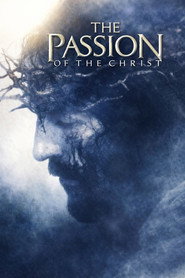
Almost the whole span of Jesus' life is set aside so that the film can remain with his arrest, trial, scourging, and crucifixion. Its relentless attention to physical suffering makes the Passion itself the subject rather than the conclusion of a larger biography, giving it a place that a conventional life-of-Christ film cannot replace.
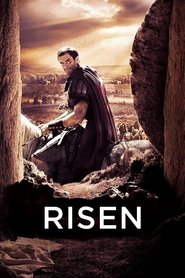
The film begins where most Passion narratives are ending. A Roman officer is ordered to investigate the disappearance of Jesus' body, turning the Resurrection into a mystery approached from the perspective of someone who initially has no reason to believe it happened at all.
After Jesus is gone, the apostles carry the new faith into the wider Roman world. · CHAPTER 05 (2 Movies)
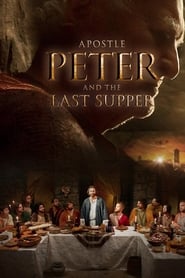
Peter becomes the center rather than Jesus. Looking back from late in his life, he remembers the Last Supper and the man he once followed, creating a useful bridge between the Gospel narratives and the generation that had to carry the movement forward after Jesus was gone.
The film portrays Saint Peter reflecting on his time with Jesus and his fellow Apostles during his final imprisonment in Rome. In particular, Peter attempts to convert one of his jailers, Martinian, by relating the life, teachings, and sacrifice of Jesus.
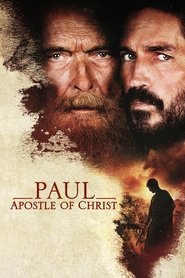
Instead of retelling Paul's conversion on the road to Damascus, the film meets him near the end of his life, imprisoned in Rome under Nero. His approaching death is set against the fear facing the Christian community outside, shifting the question from how faith begins to how it survives after its first great missionaries are gone.