Movie

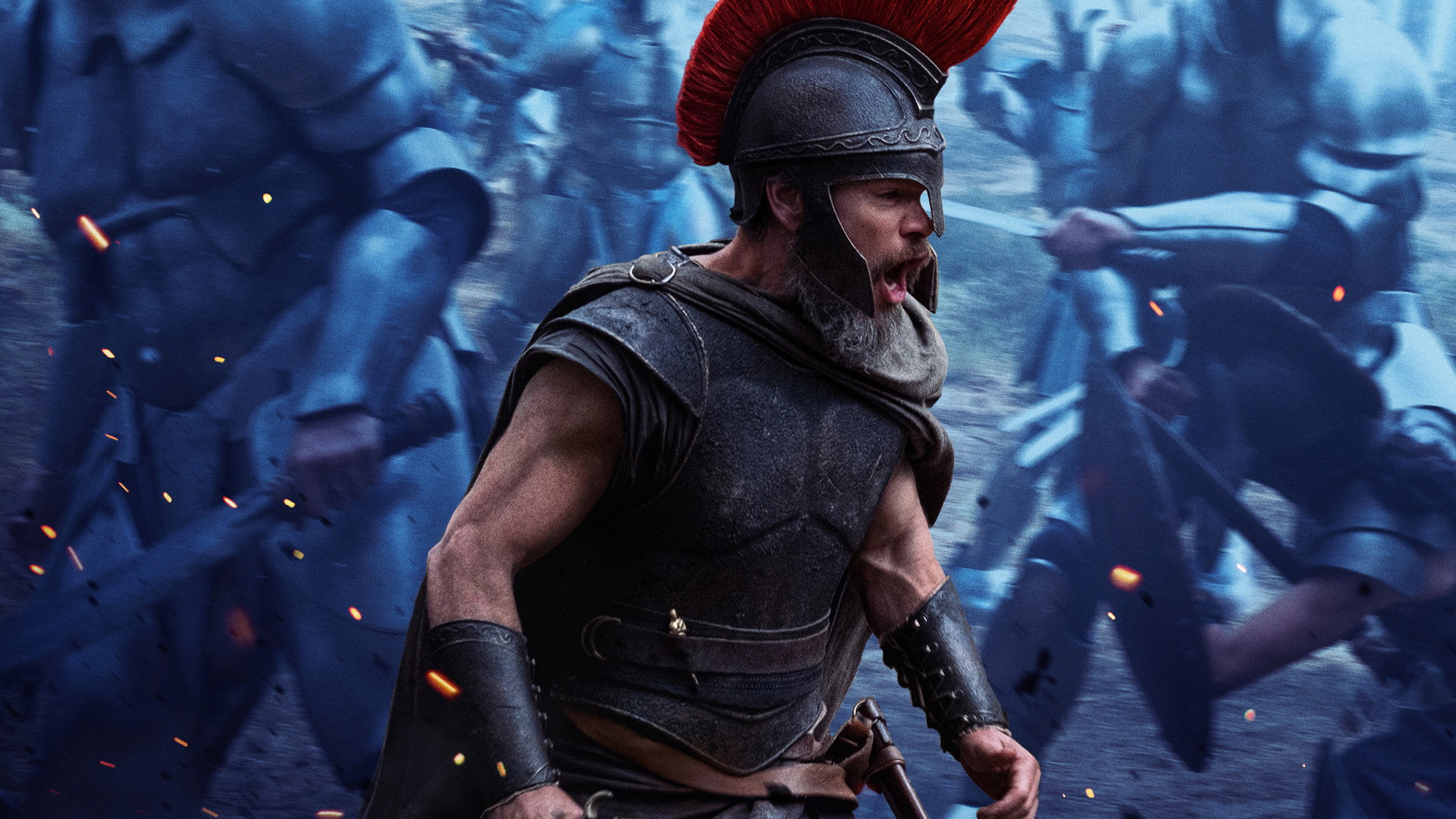
Greek mythology never places gods and mortals in separate worlds. Divine quarrels spill into wars, marriages, betrayals, and journeys, while heroes are left to live with the consequences of pride, desire, loyalty, and choice. Cinema has returned to these stories for more than a century, from the war at Troy and Odysseus' long voyage home to heroic quests and tragedies shaped by prophecy. Their settings are ancient, but their fears remain familiar: family, ambition, revenge, mortality, and the stubborn desire to find a way home.





War sends heroes away; the road home determines what remains of them. · CHAPTER 01 (4 Movies)
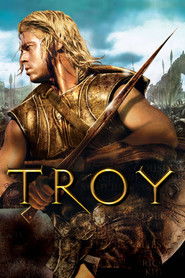
One of the most widely recognized Trojan War epics and the opening chapter of this Homeric timeline. By minimizing divine intervention, the film grounds Achilles, Hector, Paris, and Helen inside mortal ambition, pride, and warfare—setting the stage for Odysseus' grueling journey home.
In year 1250 B.C. during the late Bronze age, two emerging nations begin to clash. Paris, the Trojan prince, convinces Helen, Queen of Sparta, to leave her husband Menelaus, and sail with him back to Troy. After Menelaus finds out that his wife was taken by the Trojans, he asks his brother Agamemnon to help him get her back. Agamemnon sees this as
Picking up immediately after the fall of Troy, this epic charts Odysseus' perilous voyage across the Mediterranean toward Ithaca. War, exile, temptation, and the pull of family converge, marking the central transition from battlefield spectacle to the trials of homecoming.
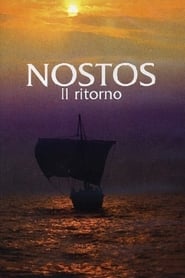
Covering the same wandering years as The Odyssey, Franco Piavoli strips away heroic fanfare in favor of a dreamlike, elemental meditation on solitude, war trauma, and memory. Minimal dialogue, vast seas, and physical exhaustion offer a poetic alternative to conventional epic storytelling.
Anchoring the final stage of the Homeric timeline, the film follows an aging, scarred Odysseus who finally steps onto Ithaca's shores. Confronting a fractured kingdom and an alienated family, it reframes the end of the Odyssey into a sobering question: reaching home does not mean reclaiming what was lost.
Divine power opens the way, but every heroic trial carries a price. · CHAPTER 02 (9 Movies)
The definitive screen voyage for Jason and the Argonauts, with Ray Harryhausen's creatures giving the Golden Fleece legend a handcrafted sense of danger and wonder.
Jason, a fearless sailor and explorer, returns to his home land of Thessaly after a long voyage to claim his rightful throne. He learns, however, that he must first find the magical Golden Fleece. To do so, he must embark on an epic quest fraught with fantastic monsters and terrible perils.
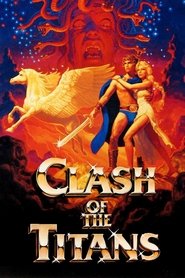
Perseus, Medusa, Andromeda, and the Olympians come together in one of the clearest cinematic gateways into Greek heroic myth.
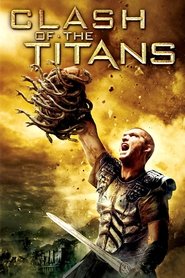
The Perseus myth rebuilt for digital-era spectacle, with divine resentment and mortal resistance pushed to the center of the adventure.
Less a direct adaptation than a modern extension of the Perseus cycle, mixing familiar gods and Titans into a new blockbuster mythology.
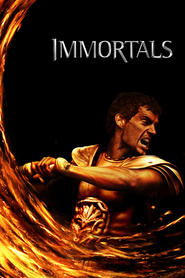
A highly stylized reinvention of Theseus and the Titan war, valued less for fidelity than for the strange, severe visual world it builds from Greek myth.
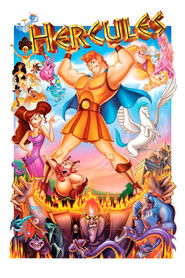
Disney freely reshapes Heracles into a story about fame, identity, and the difference between physical strength and genuine heroism.
A skeptical take on Heracles that treats heroic legend as something built through reputation, performance, and repeated storytelling.
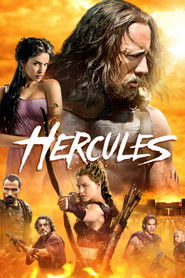
When a new enemy threatens the innocent, Hercules must lead his fearless team of warriors in a battle against overwhelming odds.
Olympian gods, demigods, Medusa, and the Underworld are folded directly into modern America, turning classical mythology into contemporary youth fantasy.
Accident prone teenager, Percy discovers he's actually a demi-God, the son of Poseidon, and he is needed when Zeus' lightning is stolen. Percy must master his new found skills in order to prevent a war between the Gods that could devastate the entire world.
The Golden Fleece and the Cyclops return inside a modern demigod adventure, showing how easily ancient quest motifs survive a change of setting.
Love crosses the boundary of death, but returning is never guaranteed. · CHAPTER 03 (4 Movies)
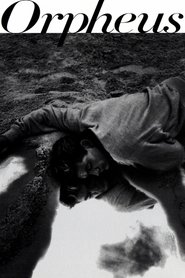
Cocteau moves Orpheus into modern Paris, turning mirrors, poetry, and death into a distinctly cinematic passage between the living world and the underworld.
A famous poet in postwar Paris, scorned by the Left Bank youth, is in love with both his wife Eurydice and a mysterious princess. Seeking inspiration, the poet becomes obsessed and follows the princess from the world of the living to the land of the dead.
The Orpheus myth moves to Rio de Janeiro, where carnival, music, love, and death give the ancient tragedy an entirely new social and cultural life.
A later Brazilian Orpheus that places the old love-and-death story inside a harsher contemporary Rio, offering a useful counterpoint to Black Orpheus.
A post-apocalyptic musical variation on Orpheus, preserving the myth's central movement: crossing into a dangerous world in the hope of recovering a lost love.
Prophecy, blood and revenge close in until consequence becomes impossible to escape. · CHAPTER 04 (7 Movies)
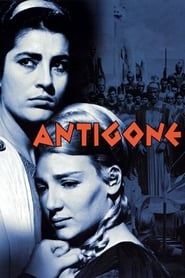
Antigone places family duty and personal conscience against political authority with the stark moral pressure of Sophoclean tragedy.
In Thebes in ancient Greece, King Oedipus kills his father and marries his mother Jocasta, having two sons - Eteocles and Polyneices - and two daughters - Ismene and Antigone. King Oedipus dies a beggar in the exile after gouging out his own eye, and Eteocle agrees to reign in Thebes in alternating years with Polynices. However, he refuses to resig...
The House of Atreus continues to consume itself as Electra turns grief into revenge, only to discover that inherited violence offers no clean ending.
Phaedra relocates an ancient forbidden desire to the modern world, showing how little tragedy needs prophecy once passion and family loyalty collide.
Pasolini turns Oedipus into a stark confrontation with fate, where every attempt to escape the prophecy becomes another step toward fulfilling it.
Pasolini and Maria Callas restore Medea's strangeness and pain, making Jason's heroic success inseparable from betrayal, exile, and its devastating aftermath.
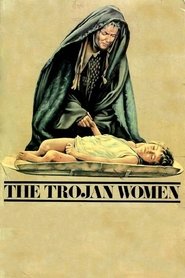
Instead of celebrating the warriors of Troy, the film stays with the women who survive them, exposing what heroic victory leaves behind.
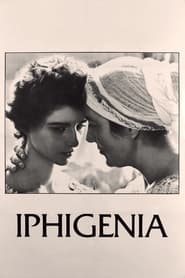
Before the ships even sail for Troy, Iphigenia makes the cost of war painfully clear through Agamemnon's choice between military duty and his daughter.
The Greek army is about to set sail to a great battle, but the winds refuse to blow. Their leader, King Agamemnon, seeks to provide better food, but accidentally slays a sacred deer. His punishment from the gods, the sacrifice of his daughter Iphigenia.
The setting changes, but the old desires, fears and conflicts remain. · CHAPTER 05 (6 Movies)
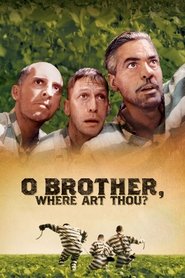
The Coens move the Odyssey to the American South, retaining its wandering hero, sirens, Cyclops figure, and long journey home without imitating ancient Greece.
In the deep south during the 1930s, three escaped convicts search for hidden treasure while a relentless lawman pursues them.
A modern family is trapped inside the sacrificial logic of Iphigenia, where guilt and punishment turn an impossible choice into a brutal moral equation.
A contemporary Oedipus variation that breaks the myth into questions of abandonment, identity, kinship, and a past that refuses to stay buried.
Oedipus is relocated to modern Latin America, where political violence replaces the ancient polis without changing the tragedy of a man investigating his own ruin.
An audacious Tokyo reworking of the Oedipus structure, showing how far Greek tragedy can travel while retaining its fatal pattern of identity and discovery.
A Greek Muse steps into modern pop fantasy, turning divine inspiration into music, romance, and one of the lighter ways classical mythology entered late twentieth-century popular culture.